

Raising a Life Path 11 Child
Other children sense the room. Your LP11 child reads it like a book. They arrived with an old soul's awareness and a sensitive receiver that picks up what others miss entirely. Here is how to protect and nurture that gift.
Who This Child Is
Other parents will describe your LP11 child as "an unusual kid" or "seems older than their age." They sense things. They know when something is wrong before anyone says a word. They feel the undercurrent of tension in a room, the sadness behind a smile, the meaning beneath what is spoken.
This is the 11 energy in its purest form: a highly tuned receiver. They were born with it. The vivid imagination, the strange dreams, the "I just had a feeling" that turns out to be right — all of it is the 11's gift operating through a child's still-forming nervous system.
What makes this child remarkable is also what makes them vulnerable. They feel more, and that means they can absorb more than is healthy. Without the right support, the sensitivity becomes anxiety, the imagination becomes worry, and the gift feels like a burden.
What They Need Most
Emotional safety at home. Conflict and tension in the home hit the LP11 child harder than they hit other children. They absorb the emotional atmosphere of their environment like a sponge. A calm, stable home is not a luxury for this child — it is a developmental requirement.
Quiet downtime to process. The LP11 child needs regular time alone — not as punishment, but as restoration. They are expending enormous energy tracking the emotional world around them. Solitude lets them discharge what they've taken on and return to themselves.
Validation that their sensitivity is a gift, not a flaw. The worst thing you can do to an LP11 child is make them feel broken for feeling so much. They need to hear, repeatedly and clearly: "What you sense is real. The way you feel things is part of who you are. It is not too much."
How to Support Their Gifts
- Nurture the intuition directly. Don't dismiss "I just had a feeling about that." Ask: "What did the feeling feel like?" You are teaching them to trust and articulate their inner signal, which is the foundation of their gift.
- Provide creative and artistic outlets. Art, music, writing, and movement give the LP11 child a way to process what they can't yet put into words. These are not extras — they are essential pressure-release valves.
- Protect their quiet time. If every spare moment is filled with activities and social engagements, this child will arrive at school exhausted and arrive at adulthood disconnected from their own interior. Guard the quiet.
- Give them words for what they sense. "It sounds like you felt sad about that" or "Maybe you picked up that she was worried" helps them develop emotional vocabulary for the feelings they absorb. This skill will serve them for life.
How to Navigate Their Challenges
The anxiety is the sensitive receiver being overwhelmed. When your LP11 child spirals into worry, the first intervention is always environment: what are they absorbing? Have there been arguments, disruptions, or tension they've been soaking up without a release?
Create calm before asking what's wrong. A quick walk, a warm drink, five minutes of quiet sitting together — the dysregulated LP11 child cannot access words until the nervous system settles. Trying to talk through a meltdown rarely works. Getting calm first, then talking, almost always does.
Prepare them for chaotic environments. Don't throw an LP11 child into crowded, noisy situations without preparation. "There will be a lot of people there. It might feel like a lot. We can leave if we need to." That one sentence hands them a sense of control that dramatically reduces the overwhelm.
Separate their feelings from others' feelings. As they get older, teach the concept of emotional boundaries: "That feeling you're carrying — is that yours, or did you pick it up from someone else?" This question alone is one of the most useful tools an LP11 can learn.
School and Learning
The LP11 child is not a surface learner. They learn through meaning. "Why does this matter?" is their real question, and the subject that answers it most powerfully will get their deepest engagement. Abstract thinking often develops early in these children, sometimes surprising teachers who expect linear thinking from young students.
Rigid testing environments can frustrate this child, not because they lack intelligence but because testing formats strip away the meaning and context that make information come alive for them. A child who can write a stunning essay about why the Roman Empire fell may score poorly on a multiple-choice test about dates and names.
Watch for underachievement that masks high ability. LP11 children sometimes appear to be average students in environments that don't meet them where they are. One teacher who genuinely sees them can unlock years of suppressed potential.
Sibling and Social Dynamics
Your LP11 child is selective by nature. One or two deep friendships mean more to them than a crowd of surface-level connections, and that is not a problem to fix — it is simply how they are built. Honor it.
They may be misunderstood by peers who find their intensity or their topics of conversation unusual. They are talking about things that feel real and important to them while classmates want to talk about what is trending. The loneliness this creates is real. Name it: "Sometimes you probably feel like you're on a different wavelength than other kids. That can be lonely. And it's also part of what makes you you."
In sibling relationships, the LP11 child is often the one who notices tension first, who tries to smooth things over, who takes on the family's emotional weight. Watch for this and relieve them of it explicitly.
What NOT to Do
- Don't dismiss their sensitivity. "Don't be so sensitive" is the most damaging thing you can say to an LP11 child. It teaches them that their core nature is wrong. Validate first, then gently help them manage.
- Don't force them into crowded or chaotic environments without preparation. Throwing them in and expecting them to cope creates lasting anxiety rather than building resilience.
- Don't mock unusual ideas or "weird" feelings. The LP11 child's inner world is rich and real to them. Ridicule of it doesn't toughen them up — it closes them down.
- Don't expect them to bounce back quickly. This child processes deeply. What looks like dwelling is usually integration. Give them more time than you think they need.
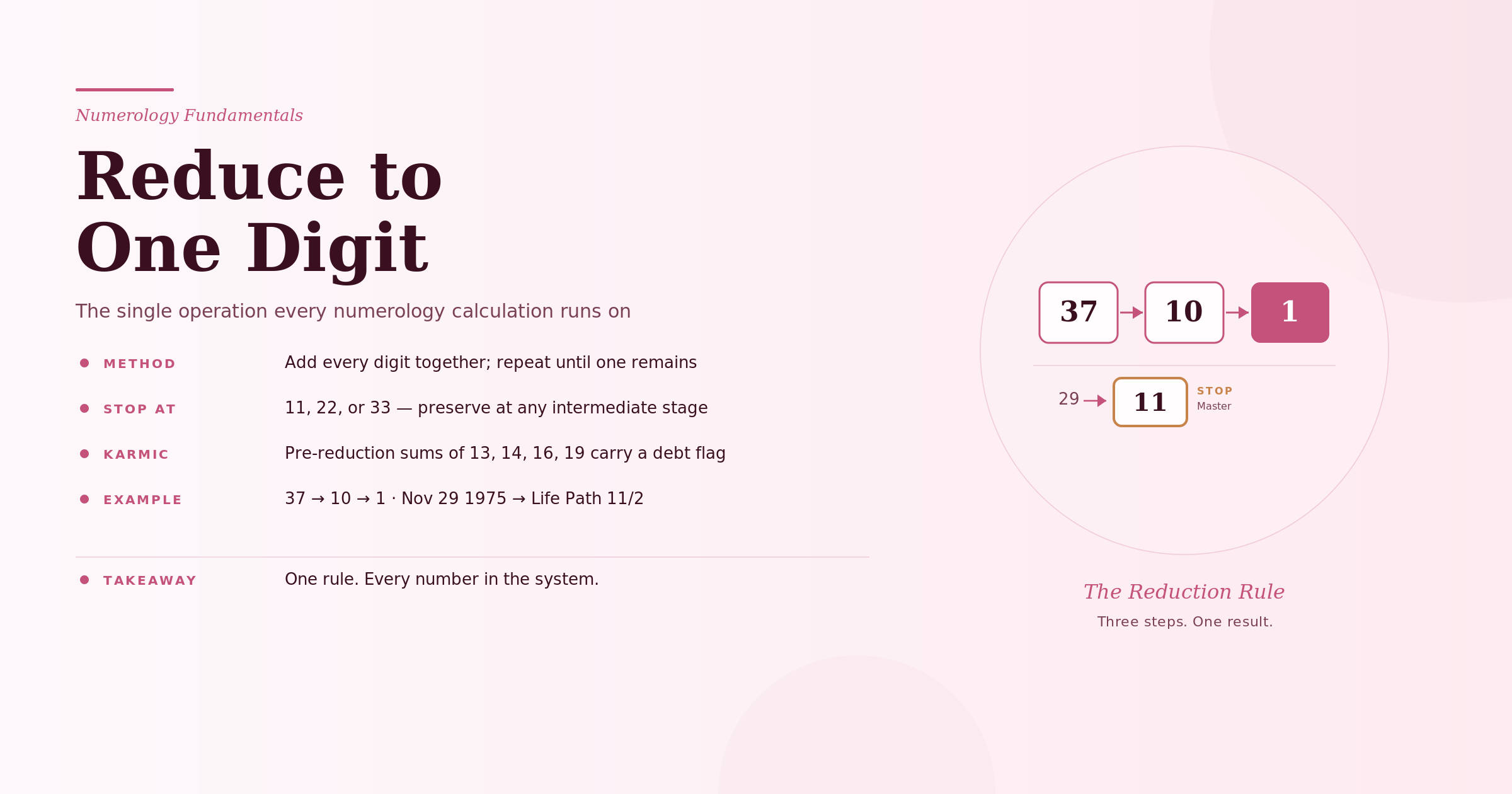
Find your child's Life Path Number at the Tools section — enter their birth date for a full numerology profile.
Calculate your child's numbers at sorteddimensions.com/resources/tools/ →
As They Grow
The Master Number 11 intensifies through adolescence. Your LP11 teen may feel a pressure they can't name — a sense that they are supposed to do something meaningful, that ordinary life isn't enough, without knowing yet what that something is. This pressure, unaddressed, can become anxiety, depression, or a kind of restless suffering.
Your job is to normalize the intensity without amplifying it. "You're a person who feels things at a depth that a lot of people don't reach. That's both a gift and sometimes hard to carry. You don't have to have it all figured out right now." This is the message they need repeatedly in their teens.
As young adults, LP11 people often move toward healing, creative, or visionary work. The gift begins to consolidate when they feel safe — safe to be themselves, safe to trust their perception, safe to act on what they know. Everything you do to build that safety now is an investment that pays across their whole life.
Parent Questions
Why does my LP11 child seem to "know things"?
The 11 is a Master Number of intuition. These children often pick up on energy, emotion, and undercurrents that others miss. This sensitivity is real and worth nurturing, not dismissing.
My LP11 child is very anxious. Is this normal?
Anxiety is common for LP11 children because they feel so much more than others. A calm home environment, predictable routines, and validation of their feelings goes a long way.
How do I handle an LP11 child who has very vivid imaginary experiences?
Take the experience seriously without amplifying it. Ask gentle questions. These children process the world through vivid inner imagery — it is imagination working at a high level, not cause for alarm.
My LP11 child seems lonely even though they have friends. Why?
LP11 children crave depth. Surface-level friendships feel hollow to them. Help them find one or two genuine peers who match their emotional depth rather than pushing for a larger social circle.
How does the LP11 child's sensitivity change in their teen years?
The Master Number energy intensifies in adolescence. They may feel a pull toward something greater without being able to name it. Stability at home and one trusted adult to talk to are both essential.
The Takeaway
Your LP11 child did not arrive with a flaw to be corrected. They arrived with a gift that the world does not yet know how to receive well. The sensitivity, the intuition, the depth that sometimes overwhelms them — these are not signs that something is wrong. They are signs that something extraordinary is present. Your task is not to make them less — it is to help them learn to carry what they carry, trust what they sense, and find the grounded, safe place inside themselves from which the gift can eventually serve the world. That task begins at home, with how you respond when they say, quietly, that they just had a feeling.
If this resonates and you want the full system in one place, the book Sort Your Life by the Numbers: A practical introduction to the art of numbers walks through it step by step.
View on AmazonTags: