
Life Path Numerology — Sort Your Life by the Numbers
Life Path Number 6
The Nurturer — Harmony, Responsibility & the Gift of Beauty
Quick Facts at a Glance
How to Know If This Is Your Number
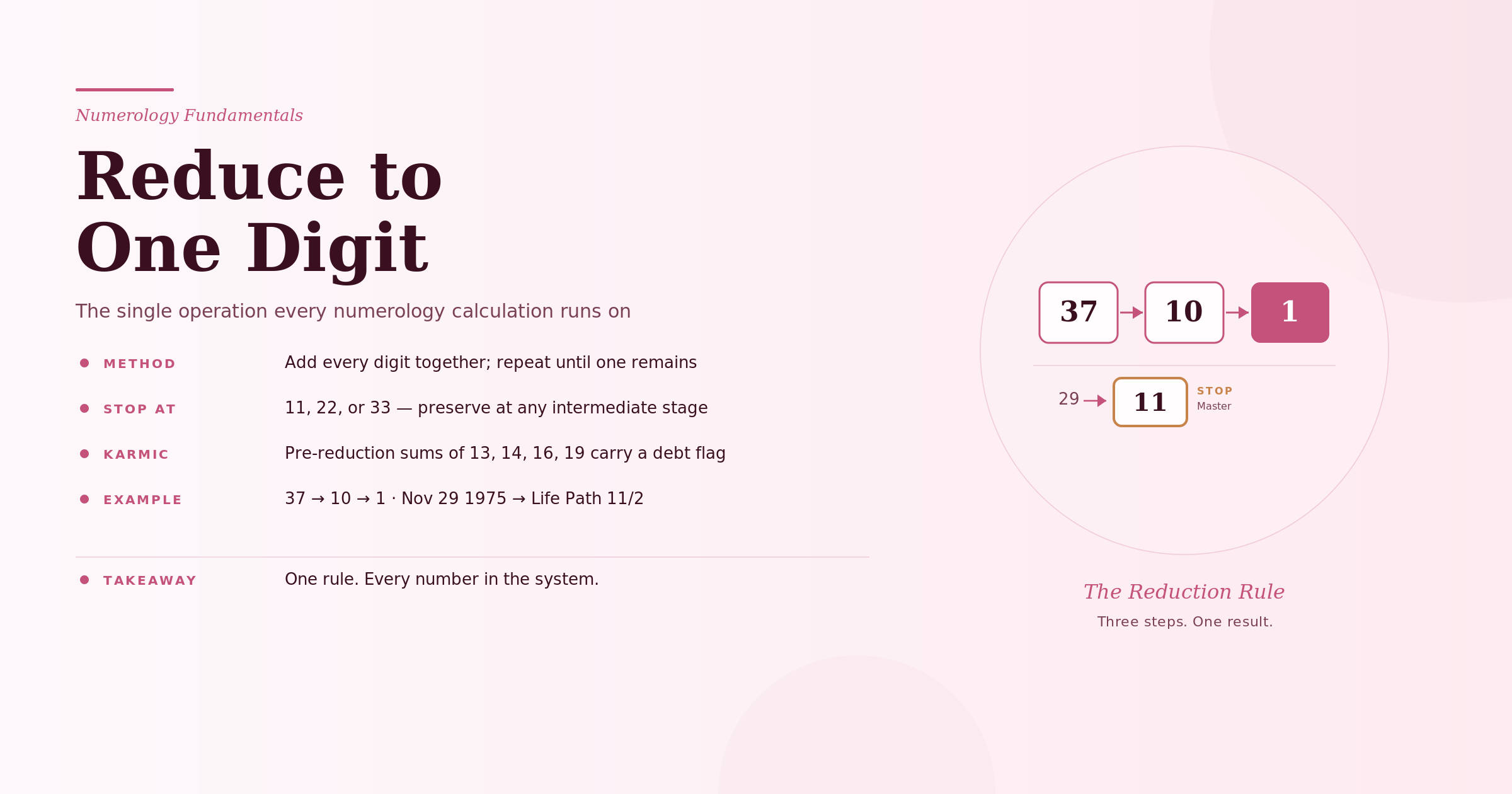
Your Life Path Number comes from your full birth date. Reduce the month, day, and year separately to single digits (or recognized master numbers 11, 22, 33), then add those three results together and reduce again to find your Life Path.
Take John Lennon as a quick illustration. Born October 9, 1940: October is the 10th month, so 1+0=1. The day is already 9. The year 1940 adds as 1+9+4+0=14, then 1+4=5. Adding 1+9+5 gives 15. Then 1+5=6. Life Path 6.
If your final single digit is 6, this article is about you. If you are unsure of your reduction or want to see your full chart, use the calculator below.
Ready to find your Life Path Number? Use the free calculator at the Tools section — enter your birth date and see your full result in seconds. Try the calculator at sorteddimensions.com/resources/tools/
What Life Path 6 Really Means
The six-pointed energy wheel of Life Path 6 — six qualities in balance around the Nurturer core
The hexagon is the strongest two-dimensional shape in nature. Honeybees build with it, carbon atoms form it, snowflakes echo it. Six is the number of that geometry — not flashy, not loud, but enduring. If you are a Life Path 6, you carry that same structural gift. People lean on you because you hold.
The 6 archetype has been called the Nurturer, the Parent, the Healer. All three names point to the same underlying pattern: a deep instinct to tend to the needs of others and to create environments where people and things can flourish. This expresses as care for family, passion for beautiful spaces, dedication to community, and a visceral discomfort when the people around you are struggling.
Venus governs your number. That means love, beauty, and harmony are not hobbies for you — they are operating principles. A cluttered, disharmonious environment genuinely disrupts your thinking. You have aesthetic opinions. You notice when something is wrong in a relationship before anyone says a word. Venus also brings the shadow: the pull toward people-pleasing, the difficulty watching others struggle without intervening, the way being needed can quietly become being controlled.
Core Strengths
Your gifts are real and they matter. Here is what Life Path 6 does well, and how that actually shows up in a day.
Nurturing Instinct
You notice what people need before they ask. This makes you exceptional in caregiving roles and in leadership — you build loyalty because your team knows you are paying attention to them as people, not just as functions.
Strong Aesthetic Sense
You move through the world with an eye for beauty and proportion. This shows up in how you dress, how you arrange your home, and how you present your work. Other people call it taste. For you, it is just how things should be.
Healing Presence
People tend to calm down around you. There is something in your energy that communicates safety. Therapists and teachers with a 6 Life Path often hear from patients and students: "I felt like you actually cared."
Responsibility and Follow-Through
When you take something on, it gets done. You feel the weight of commitment — not as a burden, but as a matter of character. This makes you someone others rely on for the long haul, not just for the exciting beginning of a project.
Devoted in Relationships
In love and friendship, you give yourself fully. Partners feel seen and prioritized. Friends know you will show up. This depth of loyalty is rare, and the people in your life who recognize it hold on tight.
Creates Beauty Everywhere
Your home is probably welcoming. Your workspace carries a certain care for form. You understand that how something looks and feels affects how people experience it — and you act on that understanding without being told to.
The Shadow Side
Every strength casts a shadow. The same quality that makes LP6 the most devoted person in the room can flip, under pressure, into something that hurts everyone — including you.
Where the Gift Turns
Career and Work
You do your best work when it matters to somebody. Abstract, transactional, or purely self-serving work drains you faster than you notice. The career sweet spot for Life Path 6 is anywhere that combines real human impact with the chance to create order, beauty, or healing.
Paths That Suit You
Healthcare — doctor, nurse, midwife, occupational therapist, physical therapist. The structured care environment and the clear purpose align well with your gifts. You are not deterred by need; it focuses you.
Mental health and counseling — psychotherapist, social worker, grief counselor, school counselor. Your healing presence and instinct for what people are not saying make you exceptional here. LP6 therapists often have waiting lists.
Education — teacher, school principal, curriculum designer. You build the kind of classroom where students feel safe enough to actually learn. The long relationship with students across a school year matches your devotion to follow-through.
Creative and design fields — interior designer, architect, chef, florist, fashion designer. Venus demands an outlet. These careers let your aesthetic sense lead, and the result often genuinely improves quality of life for others.
Community and nonprofit work — community organizer, nonprofit director, social enterprise founder. The drive to make your community better is strong in a 6. Roles where you can see the direct human result of your work are especially satisfying.
Work Style and Environment
You work best in environments that feel human — where relationships matter, where the space is maintained with some care, and where the mission is clear and meaningful. Open-plan chaos drains you. Cold, transactional cultures bore you. You want colleagues who speak to each other, a space that feels considered, and work that connects to something you believe in.
Be careful in environments that exploit your responsibility. You will always do more than your share if the team needs it. Workplaces that structurally rely on a few people carrying the weight tend to load it onto whoever will bear it — and LP6 will bear it, often without complaint, until the burnout arrives suddenly.
What to Avoid
Purely competitive environments with no team dimension. High-volume, low-relationship roles. Any work where your contribution is invisible and the results never land on a human face. The 6 withers without the feedback loop of actually mattering to someone.
Love and Relationships
For a Life Path 6, love is not a department of life — it is the organizing principle. Partnership, family, and home are central to your identity. You build your life around these things and take them seriously.
Your Love Style
You love through doing. A meal made with care. The doctor's appointment you remembered to schedule. The home you have made beautiful because beauty is how you say "you are worth this." Your love language tends toward acts of service and quality time, and you can be puzzled by partners who feel loved differently.
You are loyal to a degree that can surprise even yourself. You stay. You work on things. Giving up on a relationship is genuinely painful because you have invested so much of your identity in making it work. The shadow of this is staying too long in relationships that stopped being mutual a while ago.
What You Need
Appreciation for the giving. Not constant gratitude, but basic acknowledgment. When your care goes unseen, the resentment builds slowly and silently. A partner who sees what you do and says so keeps your tank full.
A beautiful, peaceful home. You cannot thrive in chaos. A partner who respects that the space matters is a partner who respects you.
Commitment and loyalty. You do not do casual well. You are looking for the long game, and you need a partner who understands that from the start.
Being needed — to a degree. The LP6 growth edge is learning to be loved without being depended upon. But in the early stages of development, being needed is part of how you feel relevant. A healthy partner meets this halfway rather than exploiting it.
Compatibility Patterns
Strong Matches
The 2 mirrors your devotion. The 4 matches your commitment to building something stable. The 8 respects your reliability. The 9 shares your humanitarian streak and your sense of higher purpose.
Requires Work
The 1 wants freedom and tends to resist your caretaking. The 5 craves variety and change in ways that feel like instability to you. The 7 withdraws into solitude and analysis, which you can read as rejection.
Compatibility patterns are tendencies, not verdicts. A 6 and a 5 who have done the work on their own patterns can build something real. The numbers flag the friction points — they do not determine the outcome.
Life Stages: How LP6 Evolves
The 20s — Finding the People to Care For
Your twenties are often about building the structures — the partnership, the home, the career that feels meaningful. You may take on caretaking roles early: looking after younger siblings, being the one in your friend group who holds everyone together, committing to a partner before fully understanding what you need from one. There is generosity in this. There is also a tendency to define yourself through others before you know who you are apart from them.
The 30s — The Full Weight of Responsibility
By your thirties, the responsibilities have accumulated — children, aging parents, career, home. You may be carrying most of it and not quite understanding why you are exhausted. This is the decade when the LP6 shadow can press hardest: the martyr pattern, the self-righteousness, the chronic anxiety about people you love. It is also the decade when those who do the inner work discover how to give without depleting.
The 40s — The Question of Self
Many LP6 people experience a significant shift in their forties — a career change, a relationship reckoning, a spiritual inquiry. The question underneath all of it is: who am I when I am not taking care of someone? This is not a crisis. It is the invitation to integrate the other half of your nature — the part that has needs of its own, desires of its own, a self that exists independent of its usefulness to others.
The 50s and Beyond — The Elder Nurturer
At their best, mature LP6 individuals become the steady, wise presence that a family or community organizes around — not because they are controlling, but because they have learned how to hold space without imposing direction. The beauty of the evolved 6 is care that comes without strings attached: giving because it is genuinely good, not because it is needed in return.
Worked Example: John Lennon
John Lennon — Born October 9, 1940
Day: 9 → 9
Year: 1940 → 1+9+4+0 = 14 → 1+4 = 5
Sum: 1 + 9 + 5 = 15 → 1+5 = 6
Life Path: 15/6 — The Nurturer
Lennon is a compelling LP6 case study because he shows both the gift and the shadow in high relief. The gift: his music at its best — Imagine, Love, the intimate acoustic records he made with Yoko — is shot through with the 6's longing for harmony, family, and a world that cares for its people. He was devoted to his son Sean. He made domesticity and peace into a public act.
The shadow is also visible. His first marriage was fraught with absence and control. His relationship with his son Julian was fractured for years. The same man who wrote "All You Need Is Love" could be withholding and difficult to live with. That is the LP6 paradox: the vision of harmony is real, and so is the gap between the ideal and the behavior.
What makes Lennon instructive is not that he resolved this contradiction cleanly, but that he kept working on it. The Lennon of his final years — the house husband making bread, the father present for Sean in ways he had not been for Julian — looks like a 6 who did some of the shadow work and arrived, late but genuinely, at what his number had always pointed toward.
Frequently Asked Questions
What does Life Path Number 6 mean in numerology?
Life Path 6 is the number of the Nurturer — a soul wired for responsibility, beauty, family, and healing. Ruled by Venus, it carries the geometry of the hexagon: stable, harmonious, built to endure. At its heart, LP6 is the number of devoted care and the creation of beautiful, harmonious environments.
What careers suit Life Path 6?
Healthcare, mental health and counseling, education, interior design, social work, community organizing, and the culinary arts all align with LP6 gifts. The common thread is meaningful human impact combined with the opportunity to create order and beauty. LP6 withers in purely transactional, impersonal work environments.
Who is most compatible with Life Path 6?
Life Path 6 pairs most naturally with 2, 4, 8, and 9. The 2 mirrors the LP6 devotion and emotional attunement. The 4 matches the commitment to building something stable and lasting. Friction tends to arise with 1, 5, and 7, whose independence, love of freedom, or inward focus can feel like rejection to the devoted LP6.
What is the shadow side of Life Path 6?
The main shadows are self-righteousness, meddling in others' affairs under the guise of helping, martyrdom when the giving goes unacknowledged, and chronic anxiety about imperfection in people and environments. These are the gift's dark edge, not character flaws — they emerge when LP6 gifts are pushed too hard or without self-awareness.
Does Life Path 6 need to be needed?
Often, yes — especially earlier in life. Being depended upon gives LP6 a sense of purpose and identity. The growth edge is learning to give freely without needing that giving to make you indispensable. Mature LP6s discover they can care just as deeply without making their worth contingent on someone else's need.
Was John Lennon really a Life Path 6?
Yes. Born October 9, 1940: month 10 reduces to 1, day is 9, year 1940 reduces to 14, then to 5. Adding 1+9+5 gives 15, which reduces to LP 6. His music and personal history both reflect LP6 themes: longing for harmony, devoted parenting in his later years, and the painful gap between the ideal of peace and the difficulty of living it.
How does Life Path 6 handle stress?
Under stress, LP6 tends to do one of two things: take on more (trying to fix the source of the problem through sheer effort) or withdraw into anxiety and worry. The more useful response — asking for help, naming the overwhelm directly, setting a temporary boundary on giving — does not come naturally. Stress management for LP6 often begins with learning to receive as well as give.
What does Venus mean for Life Path 6?
Venus governs beauty, love, harmony, and the aesthetic sense. For LP6, this manifests as a natural eye for design, a drive toward beautiful environments, and love expressed through acts of care and comfort. The challenge Venus brings is the pull toward excessive harmony-seeking — avoiding necessary conflict to keep the peace, at personal cost.
The Takeaway
If this resonates and you want the full system in one place, the book Sort Your Life by the Numbers: A practical introduction to the art of numbers walks through it step by step.
View on Amazon